













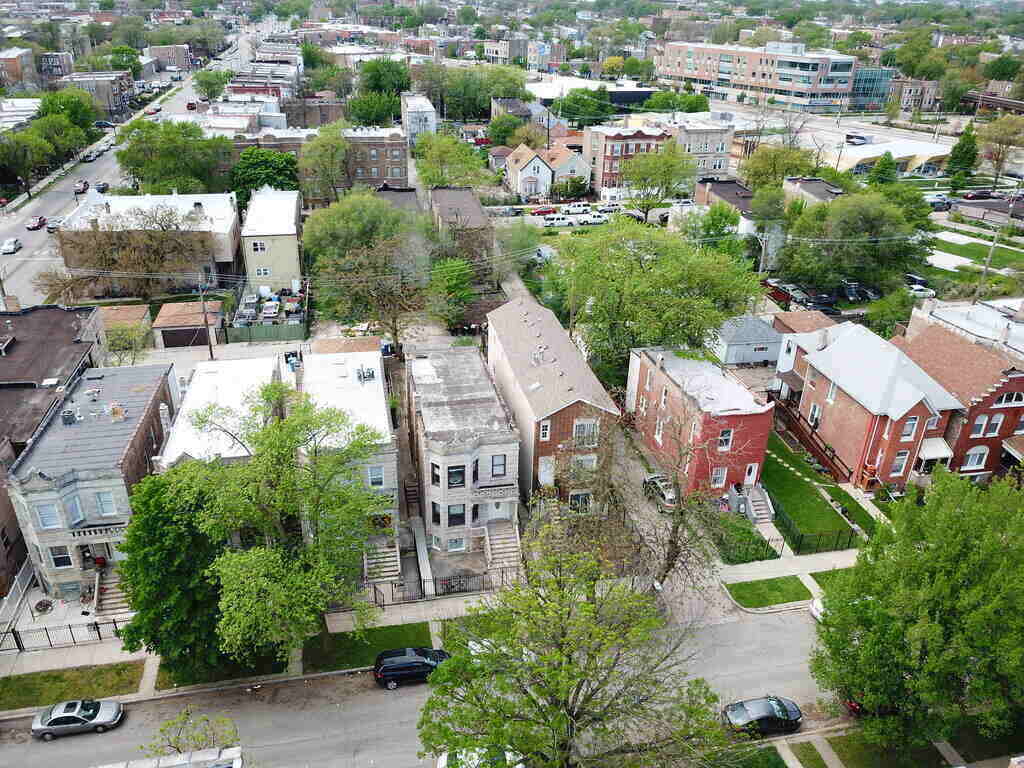
North Lawndale has experienced years of disadvantages in developmental, economic, and systemic standards for far too long. The West Side neighborhood’s rich history has been overshadowed by the plague of violence for decades. Its once-thriving streets have been stifled by disinvestments and horror stories.
North Lawndale in the Beginning
In 1869, the real-estate firm Millard & Decker built a residential suburb off of the eastern part of Cicero Township. They advertised the community as “Lawndale” suggesting it was “in harmonious union [with] the people of a community.” People and businesses were drawn to the fireproof brick buildings.
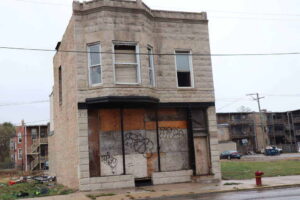 North Lawndale began to flourish as a haven for refugees from the Great Fire of 1871, then it prospered into Chicago’s Jewish ghetto. The community’s landscape was divided between two-flat apartments, Douglas Park, and massive industrial complexes. This created a need for North Lawndale to find a balance between the industrial and residential populations.
In its Prime
Many industrial workers began to settle in North Lawndale by the late 19th century. In 1973, McCormick Reaper Works opened a plant in the Lower West Side. Soon after, a Western Electric Plant and Sears, Roebuck & Co.’s headquarters brought North Lawndale to a population of 46,225 by 1910.
The Russian Jews became the community’s largest residential group by the second decade of the 20th century. They established their own community institutions, Herzl Junior College (Malcolm X College, today), several bathhouses, a commercial strip on Roosevelt Road, and Mt. Sinai Hospital. At one time North Lawndale held roughly 65,000 Jewish people, according to one study.
By the 1960s, 91% of North Lawndale’s 124,937 residents were Black. Drawn by the urban renewal project, African Americans began moving into the neighborhood in the 1950s. As a result, white residents relocated to northern communities such as Rogers Park.
North Lawndale Begins to Deteriorate
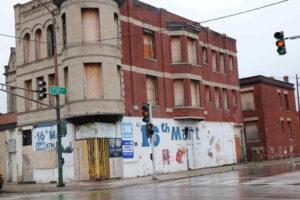 Despite being overcrowded residentially, there were no new housing projects built in North Lawndale. By late 1957, the neighborhood’s decline was so severe the Community Conservation Board labeled it as a conservation area. Unable to find work the prominently Black neighborhood’s decline continued to grow poorer.
The level of disinvestment eventually caught the eye of Martin Luther King, Jr., who chose North Lawndale as his base for the northern civil rights movement. King Jr.’s visit was found to be highly symbolic for North Lawndale residents. Though his stay caused great attraction, very little was done to make a change for the better.
However, a change did happen after King Jr. was assassinated. The death of the civil rights leader sparked a riot by the city’s West Side residents. They not only targeted the commercial centers operated by the whites but they also burned down residential areas.
Bringing New Life
The Lawndale People’s Planning and Action Council and the Pyramidwest Development Corporation — King Jr.’s inspiration — attempted to revitalize North Lawndale with new housing and attract new industries to employ residents. Their attempts were not fruitful.
Poverty, crime, unemployment, and physical deterioration caused businesses and residents to flee the area. By the year 2000, North Lawndale’s once prosperous community dropped in population size to 41,768.
In the late 1990s, some community members noted small signs of prosperity happening, though not enough to make a huge impact. However, there are many organizations, groups, and influential people starting to band together to bring new life into the North Lawndale area.
Helpful Hands
A few examples of this would be:
- Boxing Out Negativity and its Biking Out Negativity or other events.
- Young Mens Educational Network (YMEN Chicago) and their urban gardens or its Bike Box.
- St. Agatha-St. Martin de Porres Parish and its Back-to-School, feeding the neighborhood, and other various community events.
- GMA Construction Group and its determination to revitalize the neighborhoods.
- The Honeycomb Project and their family-orientated volunteering projects.
- The News School and its program employes youth (16-24) to learn about journalism, broadcasting, and social media. They are able to have a safe place to work while they learn how to become civically engaged in their community, better their writing skills, and learn how to use their voices to make positive changes.
Revitalizing Projects
On January 26, Alderwoman Monique Scott (24th) announced plans for the Ogden Avenue Corridor Improvements Project. The revamping project will focus on Ogden Avenue between Western Avenue and Pulaski Road. It is part of a years-long effort to revitalize roads in North Lawndale.
Recently, there was a ground-breaking ceremony for the Lawndale Innovation Center at 4300 West Roosevelt Road. This $68 million project will bring two 181,760 square foot, solar-powered industrial warehouses with over 50 dock spaces designed by Ware Malcomb. On the south end, there will be two 5,000-square-foot innovation centers and a public park for community use.
In addition to revitalizing the North Lawndale community, the project will roughly bring 250 temporary jobs and 250 permanent positions. This project is expected to be completed by the Fall of 2024.
A Touch of Entertainment
Army veteran Shatondrea Cox recently received a $184,000 Community Development Grant to open 14Forty Sports Grill and Bar, located at 1440 South Kedzie Avenue. After being denied the grant three times, Cox will now be able to reclaim a building that has been part of her family for years.
Her dream is to bring an entertainment and dining experience to the North Lawndale community. “I just want to bring the community back, because I remember, as a little girl, we could cross the street to get to anything that we wanted,” Cox stated.
We need to bring stuff back to our community so we don’t have to go outside of our community for these things. It would be extremely empowering.
North Lawndale was once a beautiful and prosperous area. Many hope that it will be once again. One resident stated, “The community will continue to construct new properties, and get the area back on its feet!” With the help of collaborative effort, and these projects, transformation in North Lawndale can happen.
By Sheena Robertson
Sources:
Austin Weekly News: Army vet opening sports bar in North Lawndale, carrying on family’s legacy
Urbanize Chicago: 4300 W. Roosevelt breaks ground
Block Club Chicago: Ogden Avenue Corridor Will Get Major Renovations As Part Of West Side Redevelopment
WTTW: ‘Chicago Tonight’ in Your Neighborhood: Revitalizing North Lawndale
Encyclopedia of Chicago: North Lawndale
Top and Featured Image Courtesy of Steven Vance‘s Flickr Page – Creative Commons License
Inset Image Courtesy of TNS Staff




