
















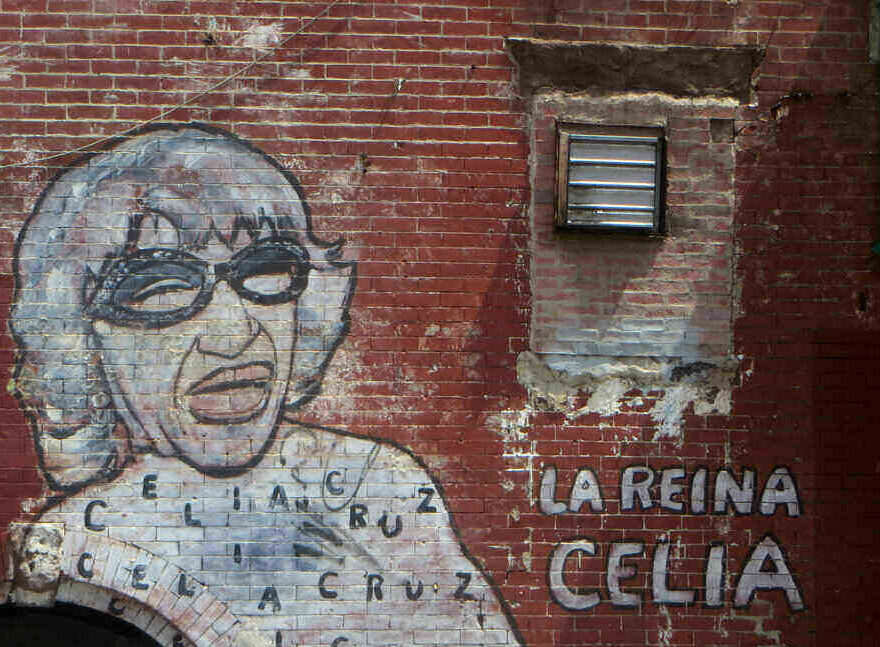
People are just finding out that famous salsa singer, Celia Cruz will be showing on every new 2024 U.S. quarters. This is a massive deal to all African American and Latina women in the U.S. since she is Afro-Latina her face on the U.S. currency speaks for all women of color like her.
Her Background
Before she became the amazing singer we all know and love, she was just a regular Cuban girl living in Havana. She was born into a low-income household but to her, that did not matter.
“I was born singing,” stated Celia Cruz. She started off singing for her younger siblings to put them to sleep since she was the oldest. But sometimes the people around her barrio which has the closest translation to the neighborhood, would sometimes stop and listen to her singing as well.
Celia Cruz’s cousin signed her up for a local radio contest called “La Hora Del Te” meaning the tea hour. This was the first time she ever used a microphone and won a prize for her singing. After this, she was constantly called to sing on different radio stations and she won almost every one of those competitions. But even though Celia Cruz’s singing career was blooming, to her father it did not seem that way, and did not want it to be that way.
Complications Never Stopped Her

Celia’s father, Simon Cruz, was a railway worker and did all he could to provide for his family. He wanted her to get an education in something else like a teacher. So she did and after she finished high school, she went to a school for teachers. But she knew that was not what she wanted. Celia chose to study music at Havana’s Nation Conservatory in Music in 1947.
Although her career was going great in her home country, it did not remain that way. After Fidel Castro took power over Cuba, she chose to move to the United States instead of returning home. But this had a huge consequence on her life. Once she became a U.S. citizen, she was exiled from Cuba forever. She was not allowed to ever return causing her to miss the passing of her parents.
Hitting Fame
Even though this was a difficult time for Celia Cruz, she never gave up on her dream. She chose to settle in New York City and immediately got successful signing for many Labels. When she joined the Tito Puente Orchestra in the 1060s, is when she finally hit international fame. This helped a lot with her career and her stage presence.
By the 1970s she was labeled as “The Queen of Salsa” and this genre became insanely popular in the Latino community.
“I prefer Salsa. I will never change my genre, never, darling,” said Celia Cruz to Generation ñ. Her biggest hit was “La Vida Es Un Carnaval” in 1998. Celia always embraced her Latina and African roots and always put them in her music. She was always proud of her heritage and was never ashamed of it.
After Her Death
The legendary singer was later diagnosed with a brain tumor and passed away in 2003. Her death wish was for her body to go to Miami so that other Cuban exiles could pay tribute, then she was buried in the Bronx. She was buried in soil she has picked up from Cuba before she was exiled. Although she was never able to step foot in her home country, she was still able to keep a piece of her land with her.
This amazing celebrity deserves to have her face in the currency more than anyone. She was such a humble soul that made such a big impact on the people that watched her. Latinos and Afro-Latinos would not want anyone else to be the one representing them. They are more than excited that next year they will be seeing a familiar face from their pockets.
Written By Erika Cano
Sources:
NPR: Queen of salsa Celia Cruz will be the first Afro Latina to appear on a U.S. quarter
Los Angeles Times: Celia Cruz makes history as the first Afro Latina to be on the U.S. quarter
Biography: How Celia Cruz Became the ‘Queen of Salsa’
Top and Featured Image Courtesy of Eden, Janine and Jim Flickr Page – Creative Commons License
Inset Image Courtesy of Art Through A Lens Photography Flickr Page – Creative Commons License




