
















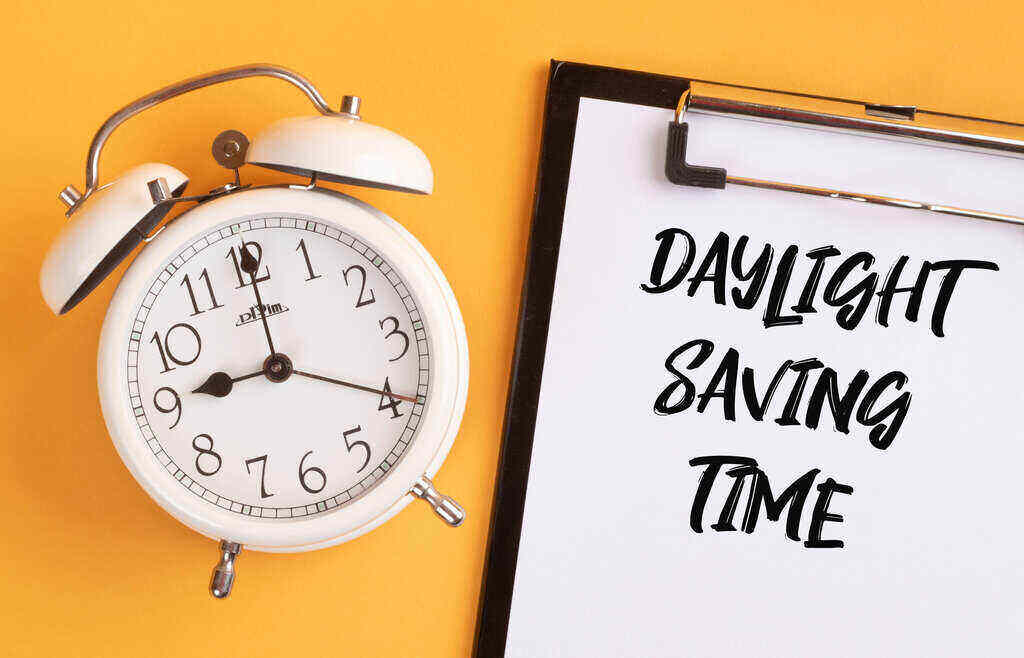
Chicago residents have experience longer nights and colder days as they get through this chilling weathers and several snowstorms. However, no one will have to worry about this much longer because the winter won’t last forever. The city is already starting to see more glimpse of daylight as the daylight saving times approaches. So be prepare change the time on alarms, clocks, watches and anything that has to manually be fix.
Furthermore, according to federal law, daylight saving time should start to take place on March 10, 2024 at exactly 2 a.m. Meaning, the second Sunday in March will be marked as the official day when clocks will spring forward. Chicago residents will finally start to experience 12 hours of sunlight per day. Additionally, the spring equinox will also be coming just days after the official daylight saving time. With that said Sunday, November 3, at exactly 2 a.m., will mark the end of daylight saving.
What is Daylight Saving

Daylight saving time happens between March and November. During this time, most American adjust their clocks by one hour. Additionally, daylight time saving last for a total of 34 weeks. During this time, we lose an hour in March as opposed to gaining an hour in the fall. This measures are taken to make sure there is more daylight in the summer evenings and more daylight in the morning during the fall.
When did Daylight Saving Time Become a Standard?
Saving time became a standard in Chicago, and the United States, in 1966, after the passage of the Uniform Time Act. This act required standard time across the country within established time zones. It was also stated that clocks would advance one hour on the last Sunday in April and turn back one hour on the last Sunday in October. Both of which occurs at 2 a.m. on the designated days.
Moreover, despite the imposing of this act it was also allowed states to exempt themselves from daylight saving time, as long as the entire state did so. However, in the 1970’s due to the 1973 oil embargo, Congress enacted a trial period of year-round daylight saving time from January 1974 to April 1975 in order to conserve energy. Ever since the imposing of the act and year-round period daylight saving time has been the stander to conserve energy.
Do all States observe Daylight Saving Time?
In addition, one important fact we need to note about daylight saving time is that not all states and U.S. territories participate in this saving time. Some of the states and territories that exclude themselves from this actions are as follows:
- Hawaii.
- Arizona (with the exception of the Navajo Nation).
- Neither territories of American Samoa.
- Guam.
- The Northern Mariana Islands.
- Puerto Rico.
- And the U.S. Virgin Islands.
Benefits of Saving Light
Saving light in Chicago and the United States can bring numerous benefits to the population. One of this benefits includes saving energy. This is due to the fact that the sun sets an hour later during the evenings which means there is fewer use of electricity around the house. People also tend to be outside for the most part during this time which also reduces the use of electricity.
Furthermore, daylight time helps save life’s. This is because children attend school during the morning, more parents travel to work during the day and many more individuals tend to run errands when there is still light outside. Extra daylight time reduces road accidents by 15% during the day time. Furthermore, when
Overall, daylight helps reduce crime. This is because people tend to be outside the most during the day rather than at night when more crime tends to occur.
Written By Nohemi Sanchez
Sources:
USA Today: When is daylight saving time? Here’s when we ‘spring forward’ in 2024
5CHICAGO: When will longer days return? What to know about Daylight Saving Time in 2024
5CHICAGO: Here’s when daylight saving time ends in the U.S., and when it will return
Featured Image Courtesy of Marco Verch Flickr Page – Creative Common License
Inset Image Courtesy of Jernej Furman Flickr Page – Creative Common License




