















Chicago is known as the Windy City. But as climate change proceeds to become a problem, the “Windy City” will soon be called “the sinking city.”
Underground Climate Change
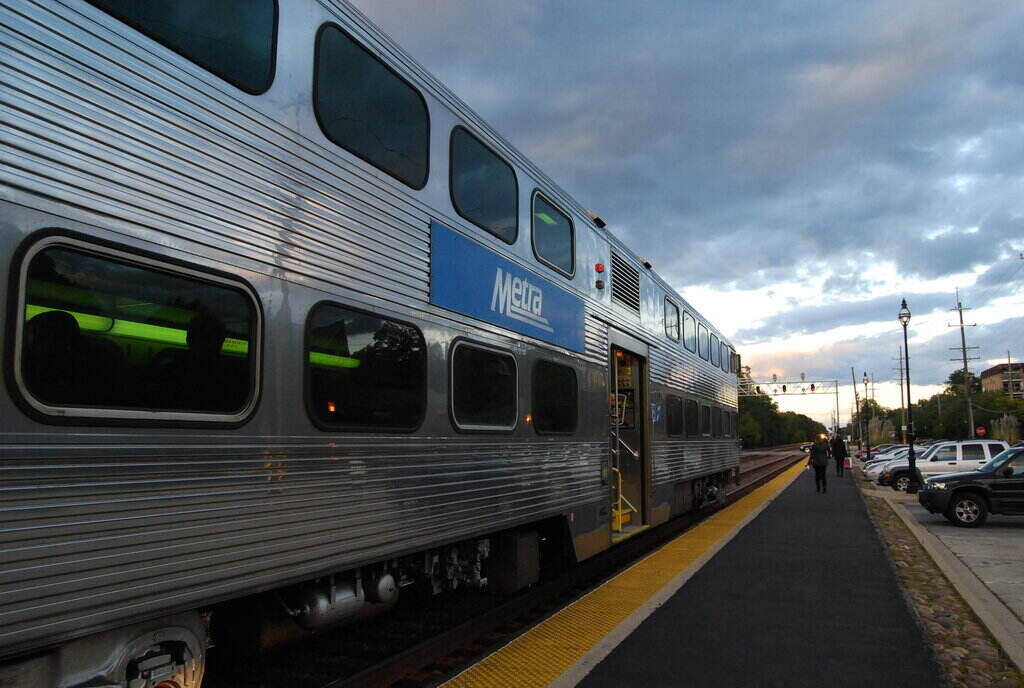
Scientists have reason to believe that Chicago is going through a process called “underground climate change.” This is when heat pours out of parking garages, sewers, and train tunnels and into the surrounding earth. Underground transportation like subway systems causes the surface to heat up at a drastic rate.
As the ground heats up, the layers of sand, clay, and rock under buildings start to swell over time. The swelling gets worse enough to make the surrounding land move, crack, and even tilt. This makes climate change from the atmosphere very different from the underground climate.
Alessandro Rotta Loria, an engineer at Northwestern University, has been researching cities with underground climate change.
Underground climate change is a silent hazard.

He emphasizes the fact that many people do not know what is going on beneath them.
Chicago Is Sinking
Chicago’s underground climate is to blame for the city’s in-process sinking. Although a city sinking may sound bad, there are not too many threats to the environment.
People do not need to worry about buildings collapsing or human life being threatened. But thinking long term, this underground climate change can affect the lifespan of the buildings.
An earlier study found that the surface underneath cities warms by about 0.18 to 4.5° Fahrenheit (F) per decade. The ground could swell and expand upwards by up to 0.5 inches due to warmer temperatures. The ground could sink also downwards, by as much as 0.3 inches.
Observations Made, and Data Collected
U.S. scientists and experts, including Alessandro Rotta Loria, decided to observe the problem up close. Over 150 temperature sensors were placed across the Chicago Loop and Grant Park. Experts chose these specific locations in order to compare and contrast results.
The temperature sensors were placed specifically in subway tunnels, basements, and underground parking garages. They made a 3D computer model in order to observe how the ground changed from 1951 to the present time.
The year 1951 is a significant year in this case due to the fact that that’s the year the city’s first subway was established. This 3D model can also help predict future temperatures for the year 2051.
After they collected temperature data for three years, the study showed a 10° Celsius (C) temperature difference between the Chicago Loop and Grant Park. The underground temperature right below the Chicago Loop was about 10°C warmer than Grant Park.
Loria also found that over the past seven decades, the ground that Chicagoans walk on daily has warmed by 27°F. This further supports the fact that it is by 0.25°F, that ground temperatures below the city are increasing by every year.
Other Effects
The durability of buildings isn’t the only thing at risk when we talk about underground climate change. Researchers have also linked underground climate change to the thermal pollution of groundwaters. In addition, shifts in plant growth can be due to subsurface heat islands.
Groundwaters being polluted thermally could cause transportation issues underground. Subway rails could overheat. This forces trains to move slower than they should or even stop altogether.
Additionally, higher temperatures underground could impact human health. For people underground, humidity can lead to conditions including dehydration, asthma, and hypertension.
Solutions
Alessandro Rotta Loria added that there is a possibility the city can turn this issue around. He suggested that tunnel operators apply thermal insulation to underground building enclosures. This would mitigate the problem of excess heat escaping.
Additionally, scientists add that excess underground heat can easily be captured. The heat would be detained and used as geothermal energy. This energy can be used to cool and warm buildings.
Another option Chicago has is to copy Switzerland’s ideas and make panels that absorb the tunnel and parking garage heat. This heat will be used to run electric heat bills. This further helps cut down electric bills.
By Makayla Grison
Sources:
The New York Times: Underground Heat Is Shifting Chicago’s Foundations
Smithsonian Magazine: Chicago May Be Slowly Sinking Because of ‘Underground Climate Change’
Sky News: Chicago: Underground climate change is ‘deforming’ land under buildings and ‘things are sinking’, says study
Top and Featured Courtesy of LearningLark‘s Flickr Page – Creative Commons License
Inset Image Courtesy of hfobia‘s Flickr Page – Creative Commons License




