
















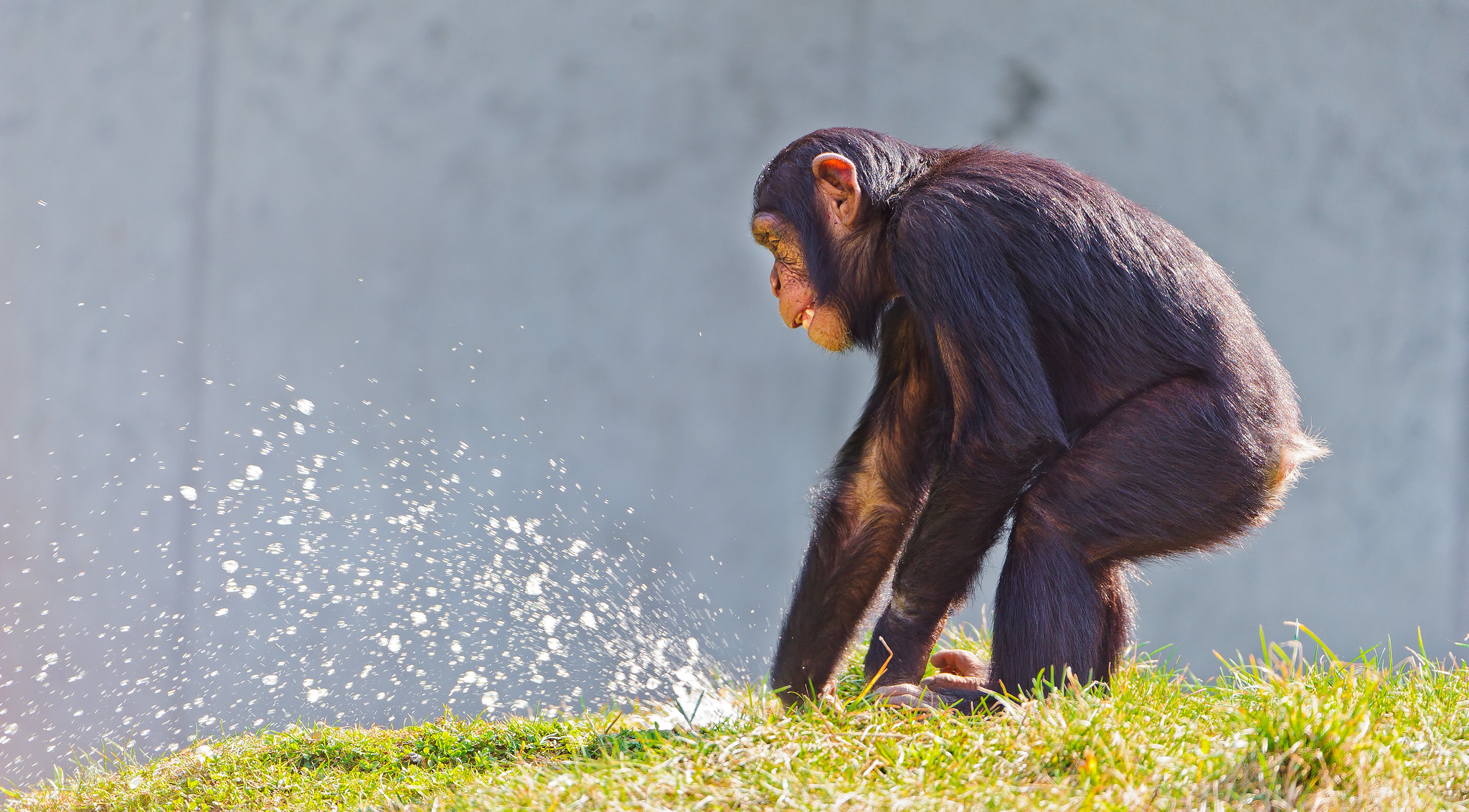
According to a press release from February 14, scientists found another trait that humans share with other Great Apes is “playful teasing.” The release states that the behaviors exhibited are playful, and joking in nature like humans.
Their behaviors show provocativeness, persistence, and the use of the element of surprise and play. Furthermore, scientists also believe this can be evidence of humor being a trait that developed millions of years ago.
Humor and Teasing
Humorously teasing your friends, annoying your siblings, or laughing with your family, humor has always been very prevalent in society. Yet, not just human society. From such a young age, around 8 months old, children learn humor. A child might play peek-a-boo, snatch something away just to give it back, or even act mischievous just to get a rise out of someone. Such as acting as if they’re going to touch a hot stove as the research lead Isabelle Laumer states.
Scientists were able to test if apes did similar things by studying different groups; one in Leipzig, Germany, and another in San Diego, California. The research team paid attention to body language and movement, facial expressions, and the response to the stimuli from the target.
They also were vigilant if the “teasin” actions were targeting one ape, if the acts intensified, or if the culprit waited for the target’s response. The findings proved that all great ape species displayed “intentionally provocative behavior, frequently accompanied by characteristics of play.”
They were able to pick up 18 different ways they had teased each other. For example, there was a juvenile chimp who had intentionally come up and hit two older chimpanzees while they. were grooming each other and then had stayed to see their reactions. Laurmer had also stated that they’d rough house a bit with poking and prodding, body slams, and restricting movement. Oraguntans were fond of pulling each other’s long hair as well.
There is also a distinction between playful teasing and play. Playful teasing is more one-sided while play engages both parties. While the culprit seems very interested in the response, there also was hardly ever recorded a violent response during the research.
Isabelle Laurmer said, “It seems that because the teaser is closely watching and observing the target’s reaction, like monitoring it, maybe it’s something like ‘how far can I go until something bad happens?’”
What Makes A Great Ape
Humans are hominoids, a subgroup of primates. When divided further humans are categorized in the subgroup of Great Apes as well. However, though humans are great apes due to structural and genetic similarities, other primates in the same subcategory are scientifically known as hominids. There are only four types of great apes and that is the chimpanzee, orangutan, gorilla, and humans.
The term great ape derives from the larger stature as well as the larger brain. The other subgroup in the category of primates are lesser Apes otherwise known as gibbons.
It’s believed apes evolved around 25 million years ago. Apes developed high diversity around 20 million years ago. Nonetheless, many species had died off with the changing environment of the old Earth. Currently, there are around 20 species of Apes and they all fall under the category of great or lesser.
What makes apes different from other primates are a few physical and genetic traits. Some of these attributes are firstly a larger and more complex brain than other primates. Secondly, distinct molars in the lower jaw with raised bumps in a “Y” pattern. Thirdly, is the shoulder and arm mobility that allows for arms to freely rotate around.
Next, a ribcage that makes for a wide, shallow chest, as well as an appendix. Above all, no external tail. Three out of four of these great apes have something in common that humans don’t, they all have two living species.

Chimpanzees
The two different species of Chimpanzees are the Common Chimpanzee and the Bonobo otherwise known as the Pygmy Chimpanzee. They reside in western and central Africa and dwell in forests and woodland areas. Chimps are the smallest of the great apes as well as the closest relative to humans.
They also don’t commonly experience sexual dimorphism while common chimp males are slightly bigger than the females, bonobo chimps don’t experience it at all. Also, they have bodies built for climbing trees and as well as being able to adapt to four-legged movement. They also have similar adaptions to allow them to swing from branches, curved fingers and toes for gripping, and strong knuckles made for “knuckle-walking.”
Chimpanzees eat a diet that consists of fruit and also meat. They have long-pointed canines and jaws. Chimps have also developed the skill to use tools such as sticks and stones. Chimpanzees live in very complex social dynamics. Some communities can range from 10 to 100 members. These communities then break up into small factions that constantly change members.
Orangutans
Just like the chimpanzees, orangutans have two living species. This consists of the Borean and the Sumatran orangutan. Orangutans tend to live in dense rainforests in Southeast Asia. However, unlike the chimpanzee, the orangutan has a very apparent sexual dimorphism. The males are considerably larger than the females, almost twice as large.
Orangutans live primarily in trees like lesser apes, but they do come down to the forest floor occasionally. For this, they also have long arms and curved toes and fingers. These large creatures only really eat fruits and insects, they also have long canines and jaws. They also have a brain capacity to use tools like twigs as well.
Orangutans tend to live a very solitary life with the expectation of mothers taking care of their young or copulating.
Gorillas
Just like the other two great apes, there are two species of gorillas, there is the Western and the Eastern gorillas! They inhabit the dense and lush forests of Central and Western Africa. Gorillas have won the title of being the biggest primates of all. Just like its cousin the orangutan, sexual dimorphism is prevalent in the gorilla’s genetics.
When they’re young they can easily climb and swing on trees. Built with similar genetics to the other great apes, they are also known to “knuckle walk.”
They’re herbivores with a diet consisting of leaves, fruits, and shoot plants. The gorilla also has a strong jaw with crushing bite force and sharp, long, intimidating canines. They also have a social group consisting of a dozen or more that stay together for life.
Written By AriAnna Rathers
Sources:
CNN– Great apes tease each other just like humans do, says new study
Australian Museum– Humans and other Great Apes
The Atlantic– Great Apes Know Just How Much to Annoy One Another
Featured Image by Tambako The Jaguar’s Flickr Page – Creative Commons License
First Inset Image by Kitty Terwolbeck’s Flickr Page – Creative Commons License
Second Inset Image by Amy the Nurse’s Flickr Page – Creative Commons License
Third Inset Image by Marty Gabel’s Flickr Page – Creative Commons License




