














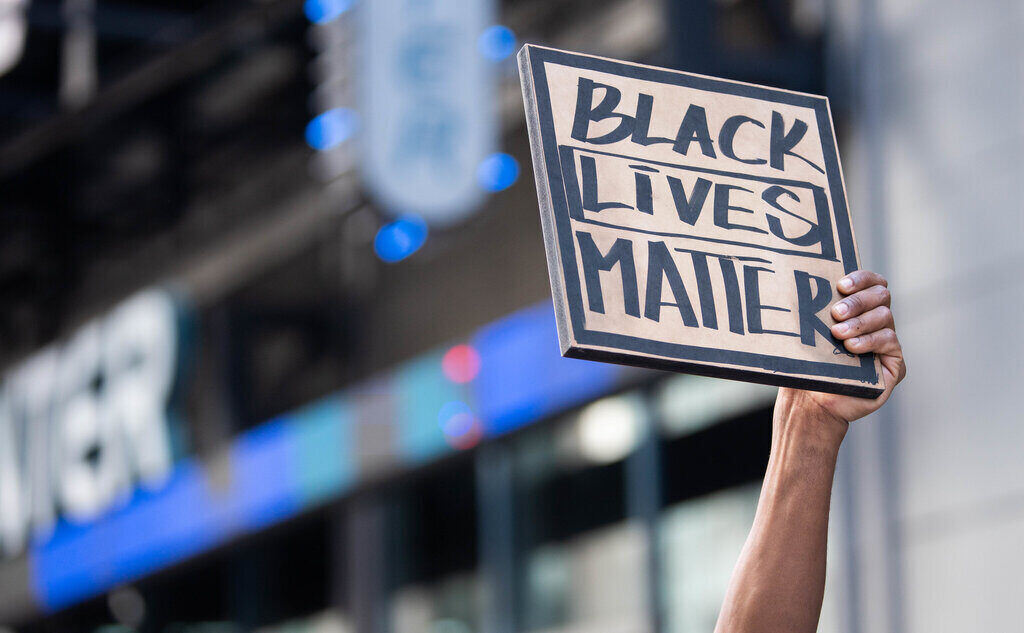
The year 2020 was a tumultuous year for us all. It started with the assassination of an Iranian general, which caused concerns of a possible WWIII. After that, the COVID-19 pandemic halted daily life and took the lives of millions here in the United States. Then a string of murders linked to police brutality called us to once again say “Black Lives Matter.”
During this time, I was in the second semester of my junior year of high school, trying my best to adjust to the very first trials and tribulations of e-learning. Like any 16-year-old, I was also struggling with my identity and self-esteem. My particular crisis centered around my racial identity and the mortifying ordeal of being known.
At the Crux
I had spent the majority of my life hating and fighting to love the parts of me that were “ethnic.” Being one of the handful of Black children in my elementary school, I quickly realized I was different from my Latino classmates. My meticulously straightened hair would frizz at the first drop of water or sweat.
They spoke a language I could not understand. In fact, I became acutely aware that I had no second language at all, which they often used to their advantage to keep me out of conversations. When our homework was to ask our families about our immigration stories and family history outside of the United States, I came up short.
By making Black friends in middle school, going natural with my hair, and learning more about my people’s history, I had overcome the worst of the damage–or so I thought. It was around my junior year of high school that the people around me began hinting at how they perceived my identity as well.
“Oh! I forgot you could say that,” a friend said in response to me saying the N-word in a song. ‘I didn’t think you would be interested in this,’ said another when I decided to take an African American Literature dual-enrollment course. “I’m concerned she isn’t finding her Blackness,” I overheard my mother say.
Being Seen
I always knew I had unconventional interests for Black girls my age. I grew up watching more anime than cartoons, I love Korean and Japanese pop music, and I closely followed British social media personalities. Above all, I was incredibly sheltered in my younger years.
In an effort to shield my brother and me from the dangers of North Lawndale, my parents had effectively cut out our connection to the local community. I had no friends on the block. We only saw glimpses of the neighborhood schools. We traveled half an hour to grocery stores with a different demographic of shoppers.
I was very used to other Black children labeling me as “different,” and had gotten used to it. But when non-Black children also failed to recognize my Blackness, my confusion had reached a peak. If no one perceived me as the young Black woman I was, then who am I?
I spent the beginning of 2020 in anguish over my identity. Do I change myself to be “Black enough” for the in and out groups? Do I even try if who I am naturally will never live up to the expectation? Every second of every day saw these questions circling my mind. It kept me up at night. It made me sad during the day. The pandemic lockdown made alone time with my thoughts even worse.
A Turning Point
Everything halted on May 25, 2020. The murder of George Floyd made shockwaves across the country. Chicago was no exception. The resurgence of the Black Lives Matter movement could be seen in every social media post. Riots destroyed entire areas of my neighborhood. I took to the streets myself to protest police brutality. In being outspoken, I lost friends and made enemies. During this time, every Black household felt the weight of current events. Our dinner table oscillated from silence to passion-filled discussions and tears.
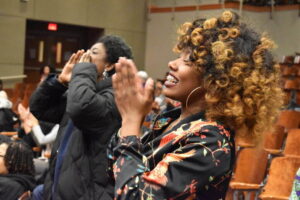
Through the chaos of it all, I had a moment of clarity. When I spoke on Black issues, people listened intently. My closest friends constantly called to make sure I was staying afloat at a time when my existence was becoming increasingly political. Although my community was under attack, I felt connected. I realized I was enough. That all of me, even the parts that were unconventional, were still “ethnic,” and no matter how I am perceived, I face the same dangers at the hands of systemic racism. It was terrifying yet affirming. By finding my voice, I had never felt more sure in my identity as a young Black woman.
The year 2020 was only the beginning of my journey to self-love and acceptance, but the silver lining of a year filled with seemingly unending hardship was receiving the push toward a better version of myself.
Written by Elena Wilson
Featured and Top Image Courtesy of Anthony Quintano’s Flickr Page – Creative Commons License
First Inset Image Courtesy of Rob Corder’s Flickr Page – Creative Commons License
Second Inset Image by Allison Acosta Courtesy of teachingforchange’s Flickr Page – Creative Commons License




