

















U.S. Recycling Is Broken
Recycling Less Is Currently Effecting the Environment, In the 1960s, Americans generated 2.68 pounds of garbage daily. By 2017, it increased to 4.51 pounds. Many Americans correctly put used items in the recycle bin and most of it never gets recycled. The fact is that recycle systems also known as Materials Recovery Facilities, are unable to keep up with the rapidly evolving consumer packaging and product market. These systems are very expensive to build, requiring millions of dollars for engineering and equipment, and are designed to last just ten to twenty years.
There are a lot of challenges and flaws in the system. Recycle rules are different depending on where it is and all materials are not accepted for recycling which makes people put the trash anywhere. Its easy for things to end up in the landfill and when people do recycle correctly facilities don’t have capacity.
Recycling at home is still challenging for 40 million people in the U.S. Creating fair access to recycling is an essential first step towards strengthening the system. Over 1.3 million recycle carts have been sent to families nationwide by The Recycle Partnership since 2014.
The Ban from China
The ban from China only added to the problem of how Recycling Less Is Currently Effecting the Environment. Given that the manufacturing industry was expanding and required these resources to feed it, China took on the responsibility to recycle almost half of the world’s waste materials for decades. Furthermore,16 million tons of plastic, paper, and metal were sent by the United States to China. it turned out that thirty percent of these combined recyclables were never reprocessed because they were polluted by non-recyclable materials, and they ended up contaminating China’s rivers and countryside. Every year between 1.3 and 1.5 million metric tons of plastic are said to have made their way into the water off the coast of China.
With China’s National policy, imports of the majority of plastics and other commodities that did not meet the country’s new and stricter purity criteria were prohibited. The United States exported its plastic garbage overseas, sending 68,000 containers to Vietnam, Malaysia, and Thailand. The United States moved its waste to nations with cheap labor and inadequate environmental regulations, such as Cambodia, Bangladesh, Ghana, Laos, Ethiopia, Kenya, and Senegal, after these nations later imposed limits on the importation of plastic waste.
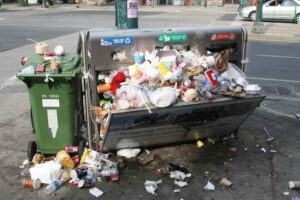
U.S. Recycling Today
The Recycle Partnership and adjunct professor in Columbia University’s sustainability management master’s program. In the absence of specific funding, infrastructure for recycling won’t be adequate. Additionally, people must solve the existing straightforward math problem, which states that recycling is not worthwhile when landfilling is inexpensive. As a result, others must begin to understand that landfills are actually full of waste.
In consequence of the long-running reliance on China to recycle for them, the United States never created a domestic recycling infrastructure, leaving us without an affordable or effective solution in the event that the market vanished.
Due to how we recycle today Recycling Less Is Currently Effecting the Environment, To further complicate matters, there is no federal recycle program in the United States. According to Kersten-Johnston, 20,000 communities in the United States are currently make the decisions about how to recycle. Including whether they should and what to recycle.
How to Fix the Problem
In fact, there is a growing demand for premium recycled materials worldwide. The need for packaging and the expansion of e-commerce are the primary drivers of the projected 1.2% annual growth in global demand for paper and cardboard, both of which will depend heavily on recycled paper.
According to research, 60% of respondents find the ways to recycle confusing. This is because there isn’t a single system in place in the United States. Instead, each of the 9,000 community recycle programs in the nation has unique regional regulations. In order to help people understand what and how to recycle in their town, others have created a number of free tools and resources. One tool is the recycling chatbot, which let’s you know whether an item is recyclable in your area.
Expanding the domestic market is essential to improving how to properly recycle in the United States. This entails developing technologies for material recovery and sorting, increasing the amount of recycled material used in products, releasing these goods onto the market, and establishing demand for them. The steps to take are obvious. We are capable of creating a recycling system that is easily accessible, user-friendly, and completely updated. To make the plan a reality, businesses, communities, the government, and all other players involved in recycling to take action.
Written by Janiyah White
Sources:
State Of Planet: Recycling in the U.S. Is Broken. How Do We Fix It?
The Atlantic: Plastic Recycling Doesn’t Work and Will Never Work
The week: America has a recycle problem. Here’s how to solve it.
Featured Image Courtesy of Michael Sun’s Flickr page – Creative Commons License
Inset Image Courtesy of Gage Love’s Flickr Page – Creative Commons License




