















Geography
The Chicago Loop is the city’s major commercial district, situated in the center of downtown. The Loop is located by the Chicago River to the north and west, Congress Parkway to the south, and Lake Michigan to the east.
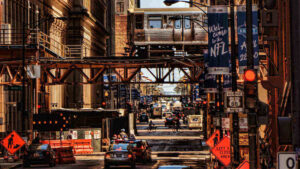
The name comes from the loop being formed by the elevated rail tracks of the Chicago “L” system, which encircle the region. This form of transportation is very popular in Chicago because it gets people where they need to be, fast.
Business and Financial Hub
Additionally, The Loop is Chicago’s principal business, financial, and transportation center, with several office buildings, company headquarters, financial institutions, and government offices. It houses the Chicago Board of Trade, the Federal Reserve Bank of Chicago, and the Chicago Mercantile Exchange.
Cultural and Entertainment Attractions Architecture
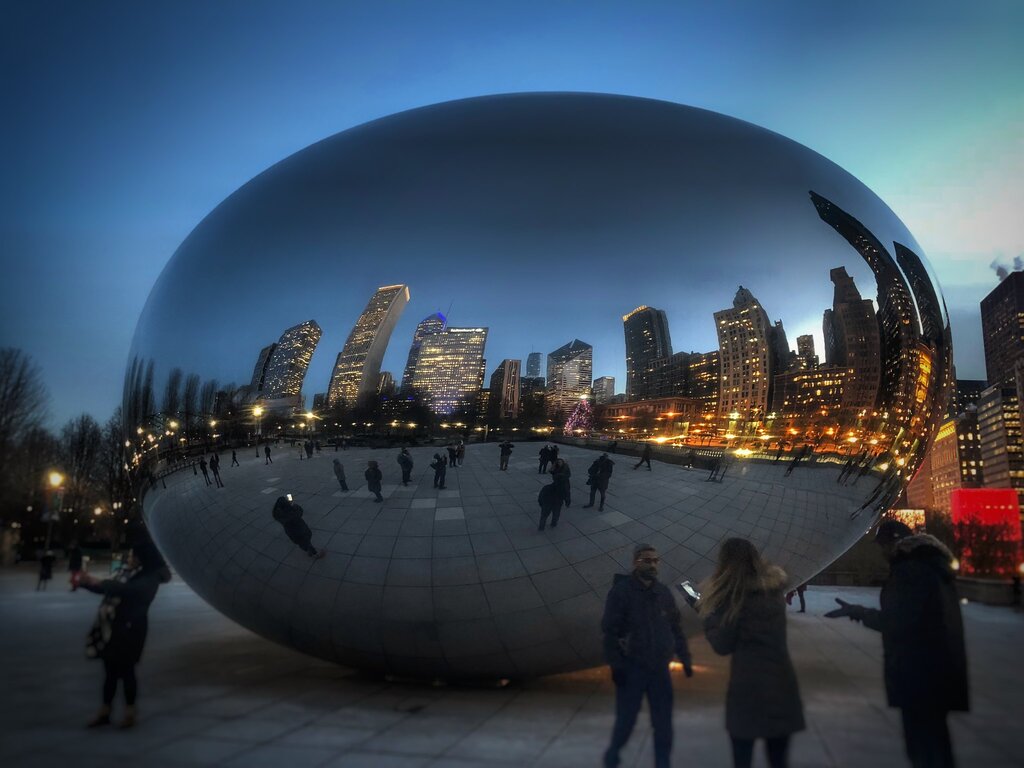
In addition to its business area, the Loop is a cultural and entertainment hotspot, with world-class attractions like Millennium Park, the Art Institute of Chicago, the Chicago Symphony Orchestra, and the Goodman Theater. The Loop’s Theatre District is home to a number of theaters that host Broadway performances, plays, and musicals.
Also, The Loop is known for its stunning skyline, which includes beautiful skyscrapers and architectural icons. Notable structures include the Willis Tower (originally the Sears Tower), the John Hancock Center, the Tribune Tower, and the Wrigley Building. The Loop also houses the Chicago Architecture Center, which provides tours and exhibits highlighting the city’s architectural past.
Transportation and shopping and Dining
Furthermore, The Loop is a significant transportation center, served by a variety of means of transportation, including the Chicago “L” system, which allows easy access to surrounding areas and suburbs. Union Station and Ogilvie Transportation Center are key commuter train stations serving the Loop, and various bus routes and bike lanes run through the region.
Although, The Loop has a wide range of shopping and dining alternatives, including bustling streets lined with restaurants, cafes, boutiques, and department shops. State Street and Michigan Avenue are well-known shopping attractions, while Randolph Street and the West Loop provide a diverse range of culinary options and nightlife.
Mission: Place making and Public Spaces
The Chicago Loop Alliance is a membership group dedicated to promoting and improving the Loop as a thriving urban core for businesses, residents, and tourists. Their goal is to foster a vibrant and welcoming downtown environment through advocacy, programming, and place making activities.
Place making and Public Spaces: The CLA aims to revitalize public spaces and enhance the pedestrian experience in the Loop. They create events like art installations, live performances, and cultural festivals to bring people into the neighborhood and foster a sense of community.
Economic Development
On the contrary, the CLA partners with local businesses, property owners, and government organizations to promote economic growth and development in downtown. This involves measures to attract new businesses, maintain existing ones, and improve the overall vitality of the commercial district.

Therefore, the CLA strives to keep the Loop clean, safe, and hospitable for residents, workers, and visitors. They collaborate with local stakeholders and city agencies to solve issues such as litter, graffiti, and public safety concerns, thereby improving the quality of life for everyone in the community.
Community Engagement
Even though, The CLA promotes the Loop as a top destination for shopping, dining, entertainment, and cultural activities. They also promote the downtown area’s numerous attractions and offerings through marketing campaigns, social media participation, and promotional events.
The CLA actively engages with the community to receive feedback, address concerns, and identify areas for improvement in downtown. They enable stakeholder interaction and collaboration to ensure that rehabilitation activities are in line with the local community’s needs and priorities.
Downtown development Authority (DDA)
For instance, Many cities have DDAs or similar organizations that promote economic growth, improve the built environment, and foster a thriving downtown sector. DDAs frequently work with local businesses, property owners, and government agencies to conduct improvement projects, attract investment, and help small businesses.
Recently, the National Trust for Historic Preservation launched the Main Street Program with the goal of revitalizing historic downtowns and commercial districts across the United States. Main Street organizations collaborate with towns to protect historic architecture, generate economic growth, and foster a sense of place through revitalization projects that prioritize design, promotion, economic vitality, and organization.
Business Improvement Districts (BIDs)
BIDs are special districts inside cities where property owners and businesses pay an additional tax to fund local services and upgrades. BIDs frequently prioritize cleanliness, safety, marketing, and beautification measures to increase the downtown district’s overall appeal and competitiveness.
All in all, many cities carry out specific downtown redevelopment projects to transform unused or dilapidated areas into thriving, mixed-use zones. These initiatives could include infrastructural improvements, public space enhancements, adaptive reuse of historic structures, and incentives to attract businesses, residents, and visitors.
Public-Private Partnerships (PPPs)
PPPs combine resources, skills, and finance from various sources to carry out comprehensive revitalization programs that meet a wide variety of social, economic, and environmental objectives.
To illustrate, this there are arts and cultural programs that contribute significantly to downtown redevelopment by encouraging creativity, community participation, and economic activity. Cities engage in cultural institutions, public art projects, performance spaces, and festivals to attract visitors, promote local artists, and establish lively cultural hubs in downtown districts.
In conclusion, downtown redevelopment is a difficult and multifaceted process that necessitates collaboration, creativity, and long-term commitment from all stakeholders. Cities can develop thriving, resilient downtown areas that serve as economic engines and cultural hubs for their communities by pooling resources, utilizing local assets, and involving the community.
Written By Kyla Hughes
Sources:
WVIK: L-DOT Is In Negotiations w/Partners to Restore Passenger Rail Service between Moline & Chicago
First inset image Courtesy of – Mariano Mantel Flickr Page CCO
Second inset image courtesy of – Christopher Parma Flickr Page CCO




