











On Sunday, March 26, the elders of North Lawndale and students of The News School congregated in St. Agatha’s church to retell the history of the community.
A community plagued by disenfranchisement and social violence ever since the death of Dr. Martin Luther King, the memory of North Lawndale has changed throughout the decades. On Sunday, community members of all generations came to listen and tell the oral history of North Lawndale.
History As It Was
To tell the history of North Lawndale, you have to go back to the 1950s. A decade before Dr. Martin Luther King Jr. moved into an apartment on 16th and Hamlin Avenue.
In the 1950s, North Lawndale was a vibrant community with many spaces for lively neighborhood life. Thriving businesses stood on every corner, and children played in Douglass Park without a care in the world.
That history is not lost, because many of those who experienced this version of North Lawndale still live in the community. Furthermore, they will be passing along this oral past in the upcoming documentary by The News School, titled “Reclaiming Our Story: The History of North Lawndale.”
The Documentary
This documentary is going to focus on the life and community of North Lawndale in the 1950s and 60s. The elders of the North Lawndale community have a story to tell Chicago. A very important story, not only about the issues that have affected and continue to affect the West Side, but about disenfranchised neighborhoods in Chicago as a whole.
The first meeting took place on Sunday, February 26. It was a conversation with community members 60 years old and up, where elders were asked to describe the differences between North Lawndale in the 1950s and 60s versus today. The biggest difference that was spoken of was the plethora of opportunities, and the spaces available for coming together as a community.
One elder spoke about sleeping outside in the gardens on Douglas Boulevard on hot summer nights, being too young to go inside the “Bucket of Blood,” which was a neighborhood bar, and the barbecue restaurants that fed the community members.
Eight tables filled St. Agatha’s church, with elders and students at The News School dining and engaging in conversation. Furthermore, they talked about how the community they reside in has changed since the elders were young. They spoke of where they used to gather with neighbors, their favorite restaurants, and the rich culture of the community.
The Story of North Lawndale
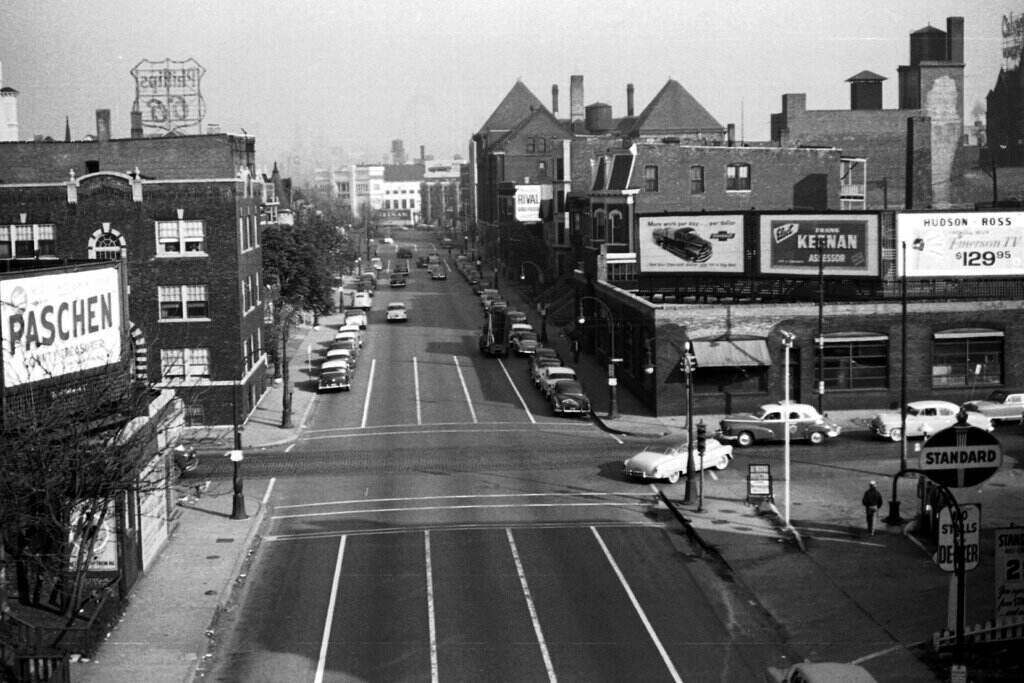
This is much more than reminiscing on the past, though. What is happening between the generations at these tables is the retelling of the oral history of a community. A community that has been deeply undervalued in the city of Chicago.
Generations young and old value the sharing and telling of stories. For this is not just North Lawndale’s history, but Chicago’s history.
A community that was once the home of one of the biggest civil rights activists in history, became a victim of disinvestment. Disinvestment continues to hurt these residents to this day.
This documentary will not just be a history of the neighborhood, but an important story that demands itself to be shared. Not just to people today, but for generations to come. Moreover, North Lawndale is a piece of Chicago’s history, of the American Civil Rights Movement, of the importance of a neighborhood that can stand against a city that devalues it again and again.
This is the oral history of a pillar of Chicago. The story of a people who will declare their history as they lived it.
Written by Caroline Buehler
Featured Image Courtesy of Caroline Buehler
Inset Image Courtesy of JArchie Flickr Page (Creative Commons License)




