














The Melting Arctic Permafrost
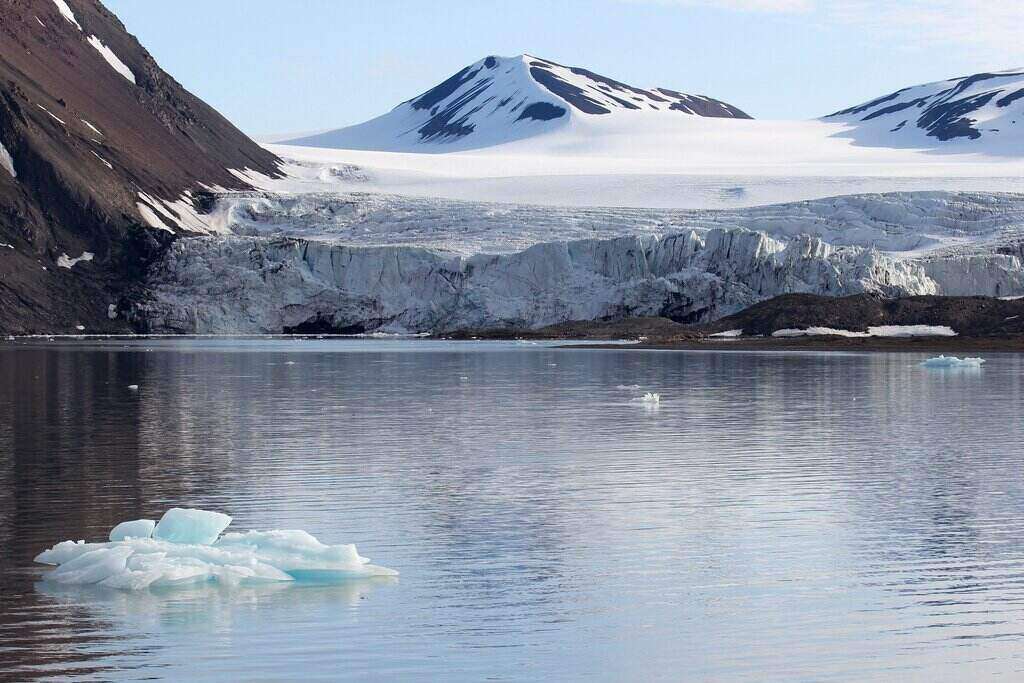
Permafrost across the Arctic has begun to melt. The Arctic has already warmed up by 5.5 degrees. This has left scientists worrying about what effects this can cause in the near and distant future. Permafrost is hard frozen ground made of soil, sand, and rocks found chiefly in high-latitude or high-altitude areas. Such as Greenland, Alaska, Siberia, the Tibetan Plateau, and northern Canada.
Melting permafrost has already been shown to have negative effects in the Arctic. Also, parts of Siberia, northern Canada, and Alaska that have large amounts of ice are being affected by “thermokarst lakes.”
These are created by thawed waters that then pool together and cause depressions in the soil. Creating small lakes. This can cause land to become unstable in just a few weeks, leading to landslides.
This has changed the lives of civilians living in areas impacted by permafrost. Many of the roads and buildings in these areas are designed for frozen climates. However, due to the “thermokarst lakes,” these roads and buildings are buckling and collapsing. Russia has up to 80% of buildings in certain cities with permafrost damage and 30% of the Tibetan plateau’s roads have been damaged, according to MIT.
Carbon Release
Besides the effects on the landscape due to “thermokarst lakes” permafrost melting can lead to more urgent issues. The Arctic permafrost holds an estimated 1,500 gigatons of carbon. This is the result of thousands of years of organic matter that never fully decomposed and lay embedded in frozen soil.
As the Arctic permafrost thaws, bacteria then break down the organic matter and cause carbon to be released as Carbon Dioxide and methane. Carbon Dioxide and methane are two of the main contributors to global warming. Once these gases are released into the atmosphere, they then cause further warming, creating a loop.
Scientists also are trying to calculate how much carbon emission will come from the melting Arctic permafrost in the coming decades. Researchers want to know how much room we will have for the carbon budget. The carbon budget is how much carbon we can emit without furthering global warming. Although scientists are looking for ways to reduce emissions, the permafrost will continue to melt. However, they are looking for ways to cut back just how much ice thaws.
Arctic Pathogen Fears
Scientists have studied over the years the hazards of pathogens from thawing permafrost. Such studies have revealed that organisms such as a 46,000-year-old microscopic worm trapped in Siberian permafrost could still reproduce and threaten the modern world.
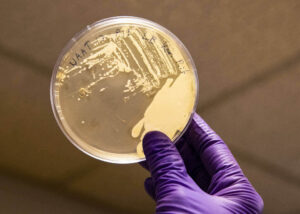
A study published on July 27 in the journal PLOS Computational Biology had results that advanced the research. A team of researchers tracked the impacts ancient pathogens have on bacterial colonies. The group used digitally modeled interactions to simulate how they interact.
Roughly 1% of the ancient viruses caused major changes to the digital environments. Furthermore, the microbes either increased diversity by 12% or decreased diversity by 32%. The microbes not only survived but also evolved. However, the pathogens didn’t kill a third of the ecosystem; they killed a third of the biodiversity.
Global Warming Creates Bigger Fears Than Pathogens?
Climate scientist Dr. Kimberley Miner at the NASA Jet Propulsion Laboratory states, “We don’t need to sound the alarm just yet.” Miner believes there are greater issues to deal with when concerning global warming. However, she believes the studies are a great step towards quantifying the risk of unknown variables. Nonetheless, she believes infections from ancient pathogens aren’t a risk.
Kimberly Miner goes on to say that the rate of permafrost thaw and its proximity to humans isn’t a troubling factor. Permafrost tends to thaw at a rate of 1.2 inches (three centimeters) per season. The thawing process releases around four sextillion cells. Alternatively, abrupt melting of the permafrost is a larger issue. The abrupt thawing can sometimes only take a few days. Numerous unknown organisms could be released during this period.
The rising temperatures from global warming will only cause more abrupt thaws. For example, Siberia’s largest permafrost crater was seen to be sinking after record-high temperatures. Regardless of what scientists think is the greatest threat from global warming, they all seem to agree that we need to lower carbon emissions.
Written By AriAnna Rathers
Sources
Climate MIT EDU: Permafrost by David McGee
Business Insider: Ancient viruses could re-emerge as permafrost melts, posing ‘unpredictable threats’ to our communities, new study says by Katie Hawkinson
CNN: New study warns against risks of ‘time-traveling pathogens’ by
Featured and Top Image Courtesy of Gary Bembridge’s Flickr Page – Creative Commons License
First Inset Image (UA System Division of Agriculture photo by Fred Miller) Courtesy of Ark. Agricultural Experiment Station’s Flickr Page – Creative Commons License




