
















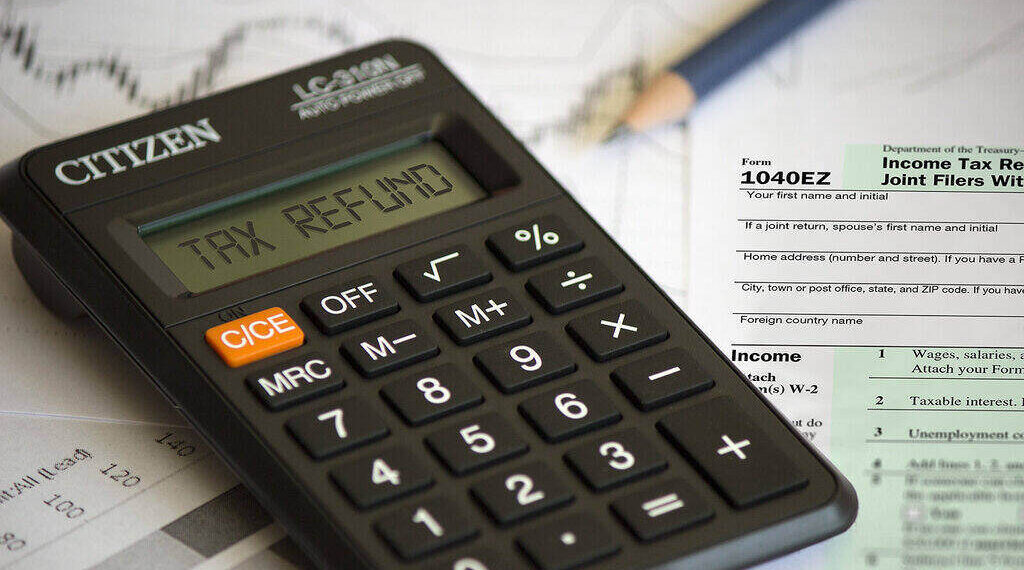
Tax season started January 28 of this year. You should have received your W-2 tax form by now, as the government requires employers to deliver W-2’s by the end of January. But don’t fret, the deadline to file your 2022 taxes with the Internal Revenue Service isn’t until Tuesday, April 18, 2023. That’s three days later than usual, due to April 15 being a Saturday, and Washington D.C.’s Emancipation Day holiday falling on Monday, April 17.
Nonetheless, mid-April will be here before you know it, and you’re going to want to make sure you have your taxes filed correctly, on time, and in a way that will be most advantageous to your wallet. Here are some tips and tricks to help you through a smooth filing process this tax season.
Do You Even Need to File Taxes?
Who is required to file taxes? The vast, vast majority of adults in the U.S. are required by law to file their taxes with the IRS. 144.5 million of 176.2 million adult individuals in the U.S. filed taxes in 2020, according to Tax Policy Center. That’s 82% of the adult population. Notable exemptions include:
- Individuals under 65 years old who made less than $12,950.
- Individuals 65 years or above who made less than $14,700.
- Jointly filing married couples under 65 years old who made less than $25,900 combined.
- Jointly filing married couples 65 years or above who made less than $28,700 combined.
Things to Know When Filing Your Own Taxes
One of the most commonly confusing aspects of tax filing is the different form names and the meaning behind those names. W-2’s are the most common tax form that most Americans receive, but there’s also W-4, W-9, 1040, 1099, and 5695. Here’s a breakdown of what each of these mean:
-

Courtesy of eFile989 (Flickr CC0) W-2: Form you receive from an employer detailing how much money you they paid you and the amount of tax withheld from your earnings.
- W-4: Informs employers on how much federal income tax to withhold from employee paychecks.
- W-9: For independent contractors or freelance workers to provide personal identification to the IRS.
- 1040: A blanket form for filing individuals that often requires additional forms or schedules.
- 1099: Form for reporting income that did not come from an employer.
- 5695: Used to declare residential energy credits.
New Federal Brackets
The new federal income tax brackets for 2022 have been adjusted to account for inflation and consumer price index. Tax brackets show the percentage of income tax filers must pay based on what range their total income falls into. There are different sets of brackets based on if you are filing individually, jointly, or as head of household. Within each set, there are seven total federal income tax brackets in the U.S.
The new 2022 brackets for individual filers are:
- 10% for incomes at or under $10,275.
- 12% for incomes exceeding $10,275.
- 22% for incomes exceeding $41,775.
- 24% for incomes exceeding $89,075.
- 32% for incomes exceeding $170,050.
- 35% for incomes exceeding $215,950.
- 37% for incomes exceeding $539,900.
IRS Free File
For individuals who earned less than $73,000 in 2022, the IRS has a free online file program with seven different providers listed. Each provider has their own specific criteria, and if you qualify, you can file your federal tax return for free, and in some cases your state return as well.
Free Tax Help for Chicago Area Residents
The City of Chicago is also offering free help and services for tax filers. The city has partnered with the nonprofit, LadderUp, to give residents free access to services for filing tax returns and claiming refunds.
“For many people, doing their taxes can be overwhelming and confusing,” says LadderUp Executive Director Phyllis Cavallone-Jurek. “We provide a trustworthy and reliable service to them for free. We allow these individuals to retain every dollar, and many people often need every dollar of their refund.”
Last year, LadderUp helped file nearly 800 returns for residents of the West Side neighborhood of North Lawndale, bringing in over $1.5 million in tax refunds.
In order to qualify for these services, you must:
- Be a full-year resident of the State of Illinois.
- Earn only up to $32,000 per year as an individual, or up to $60,000 per year for families.
- Have both spouses present, if filing jointly as a married couple.
- Not have received a Form 1099-A or 1099-C.
- Not have filed for bankruptcy.
LadderUp Site Locations in Chicago
Multiple locations in and around the city will have these free services available, below is a list of locations near the West and South Sides.
One of the closest locations to the West Side is at the McCormick YMCA in Hermosa, located at 1834 N. Lawndale Avenue, with hours from 9am to 3pm on Mondays and Wednesdays, and 9am to 12pm on Saturdays. Another is at the Brighton Park Chicago Public Library at 4314 S. Archer Avenue, open Fridays and Saturdays from 10am to 1pm. One more in the West Side suburb of Cicero is at the cafeteria of Unity Junior High School, at 2100 S. Laramie, open only on Saturdays from 9am to 12pm.
On the South Side, there is a location at Kennedy-King College, Building Y, in room 106, with hours from 10am to 4pm on Wednesdays and 9am to 12pm on Saturdays. There is also a location in Pullman at the cafeteria of Olive-Harvey College, at 10001 S. Woodlawn, from 9am to 3pm on Fridays and 9am to 12pm on Saturdays.
Written by Seth Herlinger
Sources:
Interview: Phyllis Cavallone-Jurek, Executive Director at Ladder Up, February 24, 2023
IRS: Current Tax Tips
Kiplinger: Tax Season 2023: What to Know Before You File
Tax Prep Chicago: Free Tax Help Available to Chicago Residents
USA Today: Are you ready to file your taxes? Here’s everything you need to know to file taxes in 2023.
USA Today: What are the IRS tax brackets? What are the new federal tax brackets for 2023? Answers here
Featured image courtesy of eFile989‘s Flickr page – Creative Commons License
Inset image courtesy of eFile989‘s Flickr page – Creative Commons License




