
















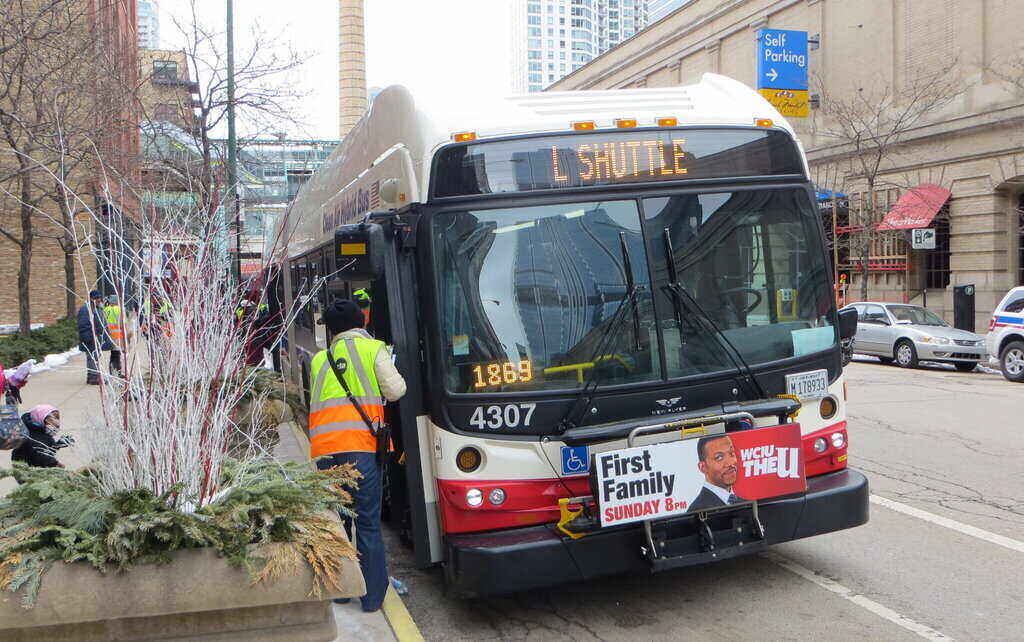
Residents of Chicago have complained a lot about the Chicago Transit Authority system in recent years. These transit buses are not as reliable as they should be. They either get delayed or they do not show up at all at the time they are supposed to.
“Streetsblog has heard many reports of poor reliability and unusually long headways on bus and ‘L’ routes in recent months, as well as inaccurate arrival times on the Bus Tracker and Train Tracker apps and digital displays at stops,” stated John Greenfield from Street Blog Chicago.
What the Community Has to Say
I went around my neighborhood looking for a person waiting for a CTA bus to interview. Meet Juritmi Rubio, a 19-year-old college student at Dominican University. She has been taking the bus since she was in high school and she never had problems before as she does now. “I can’t afford to get a car yet so I rely on the bus to get to school,” said Rubio.
One time I got late to my class because the bus took 40 minutes to arrive, it had previously said 20 minutes. Not to mention how crowded it gets.
She added that she doesn’t have a problem with the CTA trains but she does with the CTA buses. “I also don’t feel really safe in the bus,” stated Rubio. She has had previous encounters on the bus with passengers fighting or screaming. And the driver did nothing. She is not sure whether the driver can intervene but she still did not feel safe. There is no reason why passengers should feel unsafe or uncomfortable while riding with CTA.
Why Is It Happening?
The city has stated that this ongoing problem is due to a lack of CTA drivers. Before, there used to be more than thirty recruits for CTA training. Nowadays it is only two to three. This is obviously a huge problem. “They’re not replacing people lost to retirement or attrition, or those on extended sick leave,” said Keith Hill, president of the Amalgamated Transit Union.
However, it is also very likely the workforce has been interrupted by the pandemic. “Throughout the pandemic, the CTA has worked very hard to provide as much service as possible. However, like every U.S. transit agency, the pandemic has impacted our workforce, including employee scheduling and availability,” added Hill.
How to Fix It
With the amount of people trying to tackle this problem, it shouldn’t be difficult to create a solution. At least, that would be the case if the biggest solution wasn’t simply to hire more people. So instead, people look for the reason why people don’t want to work as a CTA driver, and go from there.
The most probable reasons are safety and lack of training. When someone first starts a job they expect to have some training time. However, when people choose to become CTA drivers, they get little time to train. Which then causes them stress when they start working.
There is also not enough safety for the driver. A little plastic door is not enough to keep the driver safe in case of a robbery or a violent customer. Buses should have better security for drivers. Either bulletproof doors that cover the whole driver seat, or special security.
“We’re advertising the benefits of CTA employment, including good pay, excellent benefits, and paid training for new recruits. While this has attracted interested job-seekers, it does take time to fully train new employees on the safe operations of our trains and buses,” said Hill.
Even though there have been many promises for change, none of them have been followed through. So to the community, it is difficult to believe this change will happen. Or at least, that it will happen any time soon. However, some remain hopeful for this to come true, so that the community can finally rely on public transportation once again.
Written by Erika Cano
Sources:
ABC 7 News: New CTA bus schedule released for many bus routes to improve service, improve tracker
Interview: Juritmi Rubio-Acuna February 23, 2023
Street Blog Chicago: Confirmed: Current CTA unreliability is caused by staffing shortages. How do we fix that?
Top and Featured Image Courtesy of David Wilson Flickr Page – Creative Commons License
Inset Image Courtesy of Daniel X. O’Neil Flickr Page – Creative Commons License




