















Sometimes people express a dislike for rap music, and other people call them racist for that. Why do people call others racist for hating rap? There are a few reasons why one may say that the hatred of rap music is racist. The first would be that rap music is the product of centuries of cultural development that go all the way back to slavery.
So, in this sense, to say that one hates rap music is to say that one hates an essential part of Black culture. Another reason would be to say that rap music is a reflection of the socioeconomic conditions of African Americans.
Therefore, to say that one hates rap music would be to dismiss the deeper meanings and messages within rap. This dismissal of the nuances and complexities of rap could be considered racist.
Finally, many who “hate” rap cite classical music as an inherently better form of music. What is implicitly meant by this statement is that music that is seen as “white” is better than music that is seen as “black.” This implication is deeply racist.
Rap Music Is an Essential Piece of Black Culture
Rap music is special for many reasons. It’s loved worldwide and is enjoyed by hundreds of millions of people across the world. However, rap didn’t always exist. Rap itself is the creation of a created a culture that filled the gap that American slavery created.
Unfortunately, American chattel slavery, along with the physical and mental degradation of African peoples, destroyed their culture as well. In the ashes of the old culture, rose Black American culture. This is the same culture that created jazz, rock and roll, rhythm and blues, and more.
Rap incorporates all the different elements of the Black musical tradition to create something new. The process of “sampling,” or using clips of different music and editing them together to make something new contributes to this as well. “Sampling” is how all the different genres that are a part of the black musical tradition are incorporated into the new tradition.
Artists like Kendrick Lamar use historical Black music like jazz to further communicate traditional Black musical themes. With all this in mind, to say that one hates rap music is to say that one hates an essential piece of Black culture.

Themes of the Oppressed
As an inherently Black art form, it reflects the lives of Black people through the exploration of Black themes. One of the most common themes in Black music is “the struggle.”
The struggle itself encompasses many things. It could be the never-ending war against white supremacy for Black radicals. It could also be an exploration of the difficulties of poverty.
What is so special about rap is that so many different aspects of Black life can be explored within the rhymes. It primarily reflects the choices that people make in order to survive. It is this exploration of survival that creates “beauty in the struggle.”
Put simply, people struggle to survive and try to use that as a basis for great art. The people that society disregards are taking that power back by creating music that reflects their daily environments. So, the next time one hears a trap song, think, “This is a reflection of the socioeconomic conditions of Black people.”
Or one could simply enjoy the music. Either way, the hatred of such music carries anti-Black sentiment. The reason why is that the incorporation of Black themes within mainstream rap makes rap an inherently Black art form. Therefore, it is racist to hate rap as an art form.
The Comparison Between Classical and Rap Is Very Racist
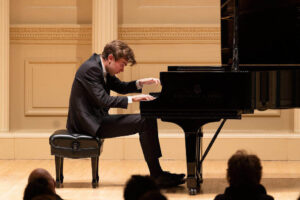
Sometimes, when people say that they hate rap, what usually comes next is the propping up of traditionally white music. Whether the comparison is between rap and classical, or rap or country, it’s all racist.
The reason why is that traditionally white music is seen as inherently better than traditional Black music. In the case of classical music, this is especially true. Classical music is viewed as an inherently great genre of music. This is partially due to its proximity to whiteness.
For example, one may ask why a person prefers classical to rap. A likely answer is that it “just sounds better.” However, this “sounding better” isn’t really about sound, it is about the perception of sound. Rap is perceived as a lower form of music simply because of its close proximity to blackness. In a juxtaposition, in an alternate universe where Black people created classical and white people created rap, those same people wouldn’t be saying they prefer classical.
Hegemonic Whiteness
One may see this argument and say “Music taste is subjective.” The thing about subjectivity is that it isn’t immune to hegemonic influence. Hegemonic influence is an influence that plays into the views of the group in power. Hegemony is the complete control of the narrative against the group’s primary targets.
For the hegemony of white supremacy, the primary target is blackness. As a result, American white supremacy sends messages throughout society both direct and indirect that whiteness is preferable to blackness. This results in an implicit anti-Black bias, and therefore a bias against rap and bias toward classical.
In conclusion, hating rap is racist for a couple of reasons. Primarily, the hatred of rap that some people have is part of a centuries-long effort against blackness and Black art. Rap is an art form with nuance and complexity that is worth exploring. Rap is so much more than many believe it to be. Within rap is a Black musical tradition 400 years in the making.
Written by Kenneth Mazerat
Sources
Huffington Post: Call It What Is Is: White Hegemony
Perception: Implicit bias
Ethics of Development in a Global Environment (EDGE) | Poverty & Prejudice | Media and Race | Updated July 26, 1999
Featured and Top Image Courtesy of Magnus D’s Flickr Page – Creative Commons License
First Inset Image Courtesy of Steven Pisano’s Flickr Page – Creative Commons License
Second Inset Image Courtesy of Gabriel Saldana’s Flickr Page – Creative Commons License




