
















The Bizarre World of Cicada-Zombifying Fungi
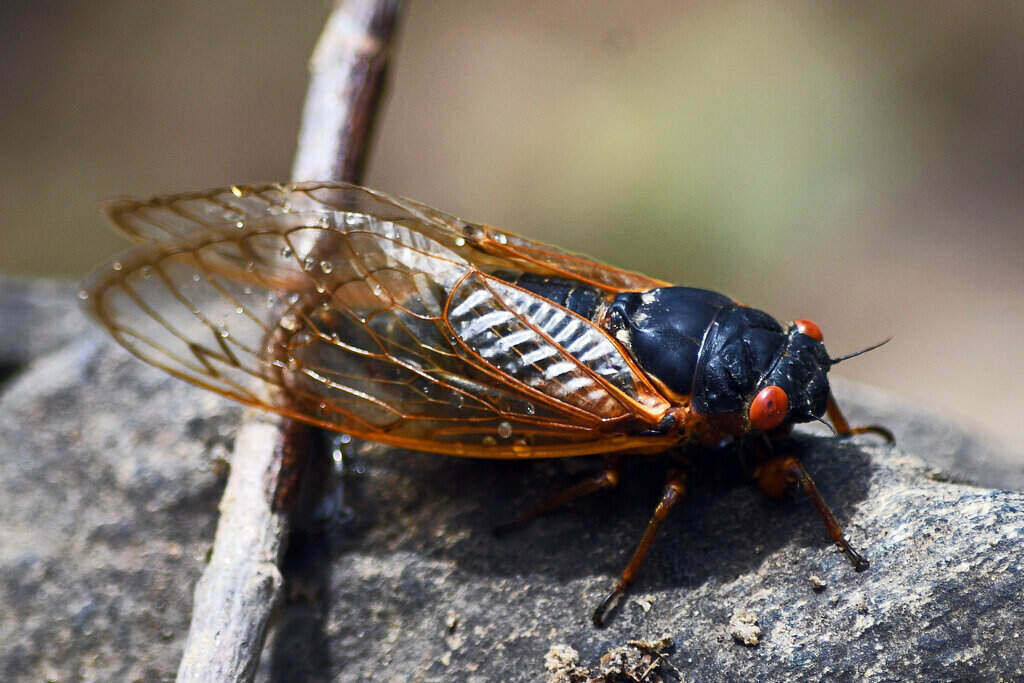
This summer, with the arrival of cicada broods, scientists are actively collecting specimens of cicadas infected with a mysterious parasitic fungus. This fungus alters the insects’ behavior, turning them into hypersexual “zombies”. Making them behave as though they are on amphetamines, all in a bid to spread the parasite to other hosts. Known for their striking bulging red eyes and loud mating calls, cicadas can appear eerie on their own. However, some of them indeed became hypersexual zombies, manipulated by an oversized fungus. Causing their behavior to be even more unsettling.
The Hosts: Periodical Cicadas and Their Unique Life Cycle
Periodical cicadas, particularly those belonging to the Magicicada genus, spend the majority of their lives underground as nymphs, feeding on root fluids. After either 13 or 17 years, depending on the species, they emerge en masse in what is known as a “brood,” covering forests with their cacophonous mating calls. This synchronized emergence, which can involve millions of cicadas per square mile, presents a feast for predators and a prime opportunity for parasites like Massospora to proliferate.
The Fungal Invasion: Dormancy and Activation
Massospora, a genus of fungi well adapted to this unusual life cycle, lies dormant in the soil, waiting patiently for the cicadas to emerge. Once the cicadas molt into their adult forms, they become vulnerable to infection. The fungus invades through the cicada’s soft exoskeleton, infiltrating the body cavity where it begins its insidious colonization. Initial infection may go unnoticed as the fungus establishes itself within the cicada’s body, but over time, it consumes the insect’s internal tissues, gradually weakening its host.
Manipulation and Infection: Inside the Cicada
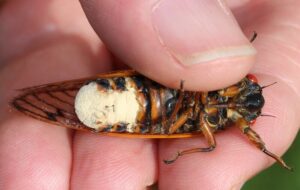
The true horror of Massospora’s interaction with cicadas lies in its ability to manipulate their behavior, turning them into zombies. As the fungus consumes the cicada’s abdomen and organs, it alters the insect’s nervous system and changes its behavior to benefit the fungus’s reproductive cycle. Infected cicadas, despite their physical deterioration, exhibit peculiar behaviors, notably hypersexuality. Male cicadas infected with Massospora engage in frantic attempts to mate, often engaging in repeated wing-flicking motions and attempting to copulate with both male and female cicadas. This behavior, though futile for reproduction, serves as a mechanism for the fungus to spread its spores to healthy cicadas, thereby continuing its life cycle.
Physical and Visual Changes: The Zombie Cicada
The physical changes wrought by Massospora infection are equally gruesome. Infected cicadas often lose abdominal segments or even parts of their abdomen entirely, which are gradually replaced by a mass of fungal spores. This grotesque transformation leaves the cicada resembling a “zombie,” with its lower abdomen filled with fungal matter ready to spread and infect other cicadas. The fungal spores mature within the cicada’s abdomen, eventually bursting forth to disperse into the environment, where they await the next generation of cicadas to continue the cycle.
Ecological Impact: Population Dynamics and Ecosystem Effects
The impact of Massospora on cicada populations can be profound. By significantly reducing cicada numbers during their periodic emergences, the fungus alters ecological dynamics. Cicadas play essential roles in forest ecosystems, particularly in nutrient cycling and as prey for numerous predators, making their population fluctuations of considerable ecological consequence. The temporary reduction in cicada numbers due to Massospora infection can affect food webs and nutrient cycling, potentially influencing forest health in unforeseen ways.
Evolutionary Insights: Coevolutionary Arms Race
From an evolutionary standpoint, the relationship between Massospora and cicadas raises intriguing questions about coevolution. How has Massospora evolved such precise mechanisms for manipulating cicada behavior? What adaptations might cicadas develop in response to such a formidable parasite? These questions underscore the ongoing evolutionary arms race between parasites and their hosts, as each evolves strategies to outmaneuver the other in a battle for survival and reproduction.
Nature’s Astonishing Realities
All in all, the fungus Massospora and its manipulation of cicadas into zombies represents a compelling example of parasitic adaptation and the intricate interplay between organisms in nature. This phenomenon not only highlights the astonishing diversity of life strategies but also challenges our understanding of the boundaries between organism and parasite, manipulation and adaptation. As scientists continue to unravel the complexities of this relationship, the story of Massospora and cicadas serves as a stark reminder of the extraordinary and often unsettling forces at play in the natural world.
Written by Jaliyah Triplett
Sources:
Fox News: Hypersexual ‘zombie’ cicadas infected with parasitic fungus being collected by scientists by Stephen Sorace
New York Post: Sex-crazed zombie cicadas on speed: Scientists track a bug-controlling super-sized fungus by Associated Press
Scientific Reports: A specialized fungal parasite (Massospora cicadina) hijacks the sexual signals of periodical cicadas (Hemiptera: Cicadidae: Magicicada) by John R. Cooley, David C. Marshall & Kathy B. R. Hill
Featured Image Courtesy of pontla Flickr Page
Inset Image Courtesy of Dave Webb Flickr Page




