
















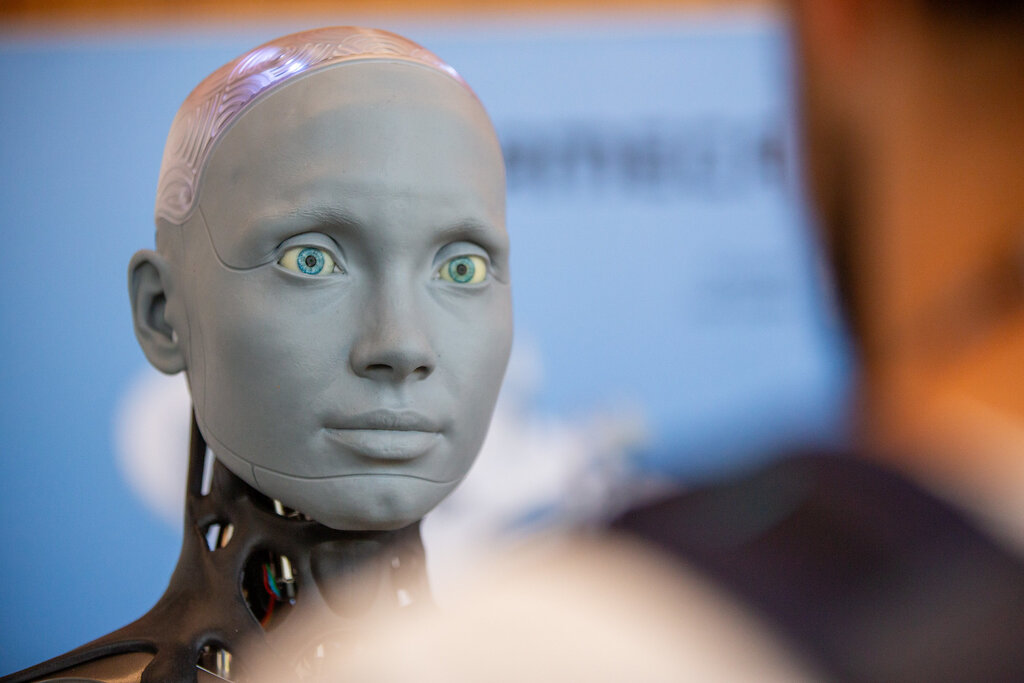
The Rise and Impact of AI Technology
Artificial Intelligence (AI) technology has revolutionized various sectors by enabling machines to perform tasks that typically require human intelligence. From machine learning and natural language processing to robotics and computer vision, AI encompasses a wide range of technologies that are transforming industries and our everyday lives. This essay explores the development of AI, its applications, benefits, challenges, and the ethical considerations it entails.
Development of AI Technology
The concept of AI dates back to ancient times, with myths and stories about intelligent automatons. However, the formal development of AI began in the mid-20th century with the advent of digital computers. In 1956, the term “artificial intelligence” was coined at the Dartmouth Conference, marking the start of AI as a field of study. Early AI research focused on symbolic reasoning and problem-solving, leading to the development of programs that could play chess, solve mathematical problems, and understand basic natural language.
The growth of AI technology has been driven by advancements in computing power, the availability of large datasets, and the development of sophisticated algorithms. Machine learning, a subset of AI, has been particularly influential. It involves training algorithms on large datasets to recognize patterns and make predictions. Deep learning, a type of machine learning that uses neural networks with many layers, has achieved remarkable success in tasks such as image and speech recognition.
Applications of AI
AI technology has a wide range of applications across various industries. In healthcare, AI is used to analyze medical images, predict patient outcomes, and assist in diagnosis. For example, AI algorithms can detect early signs of diseases like cancer from radiological images with high accuracy. In finance, artificial intelligence is employed for fraud detection, algorithmic trading, and personalized banking services. AI-driven chatbots and virtual assistants are enhancing customer service by providing instant responses to queries and automating routine tasks.
In the transportation sector, AI is at the heart of autonomous vehicles, enabling cars to navigate and make decisions without human intervention. AI is also transforming the manufacturing industry through the use of robots that can perform complex tasks with precision and efficiency. In entertainment, AI algorithms power recommendation systems on platforms like Netflix and Spotify, personalizing content for users based on their preferences and behavior.

Benefits of AI
The benefits of artificial intelligence technology are manifold. It enhances efficiency and productivity by automating repetitive tasks, allowing humans to focus on more complex and creative activities. AI can process and analyze vast amounts of data at speeds far beyond human capability, providing insights that can drive better decision-making. In healthcare, AI has the potential to improve patient outcomes by enabling earlier diagnosis and personalized treatment plans. In education, AI-powered tools can offer personalized learning experiences, adapting to the needs and pace of individual students.
AI also has the potential to address societal challenges such as climate change and resource management. For example, AI can optimize energy use in smart grids, reduce waste in manufacturing, and improve agricultural practices through precision farming.
Challenges and Ethical Considerations
Despite its benefits, AI technology poses several challenges and ethical concerns. One of the primary challenges is ensuring the transparency and explainability of AI systems. Many AI algorithms, particularly deep learning models, operate as “black boxes,” making it difficult to understand how they arrive at specific decisions. This lack of transparency can be problematic in critical applications such as healthcare and criminal justice, where decisions can have significant consequences.
Bias in AI algorithms is another critical issue. AI technology systems trained on biased data can perpetuate and even amplify existing prejudices, leading to unfair and discriminatory outcomes. Addressing bias requires careful consideration of data sources, as well as the development of techniques to identify and mitigate bias in AI models.
The impact of Artificial intelligence on employment is also a significant concern. While AI can create new job opportunities, it
can also displace workers in certain sectors, leading to economic and social disruption. Preparing the workforce for the changes brought about by AI involves investing in education and training programs to equip individuals with the skills needed for the AI-driven economy.
Ethical considerations around AI include issues of privacy, security, and the potential for misuse. AI systems often rely on large amounts of personal data, raising concerns about data protection and privacy. Ensuring the security of AI systems is crucial to prevent malicious attacks and misuse, particularly in applications like autonomous vehicles and critical infrastructure.

Conclusion
AI technology holds tremendous promise for transforming industries and improving our daily lives. Its applications span healthcare, finance, transportation, manufacturing, and beyond, offering significant benefits in terms of efficiency, productivity, and decision-making. However, realizing the full potential of AI requires addressing challenges related to transparency, bias, employment, and ethics. By navigating these challenges and fostering responsible AI development, we can harness the power of AI to drive innovation and address pressing societal issues, paving the way for a more advanced and equitable future.
Written By Kyla Hughes
Sources
BBC – What is AI, how does it work and what can it be used for?
The New York Times – Google Unveils AI Overviews Feature for Search at 2024 I/O Conference
First Inset Image Courtesy of Ecole Polytechnique Flickr Page – Creative Common License
Second Inset Image Courtesy of Ars Electronica Flickr Page – Creative Common License




